
Document Automation
5 Ways Document Automation Reduces Filing Errors for Immigration Attorneys
January 22, 2026Read
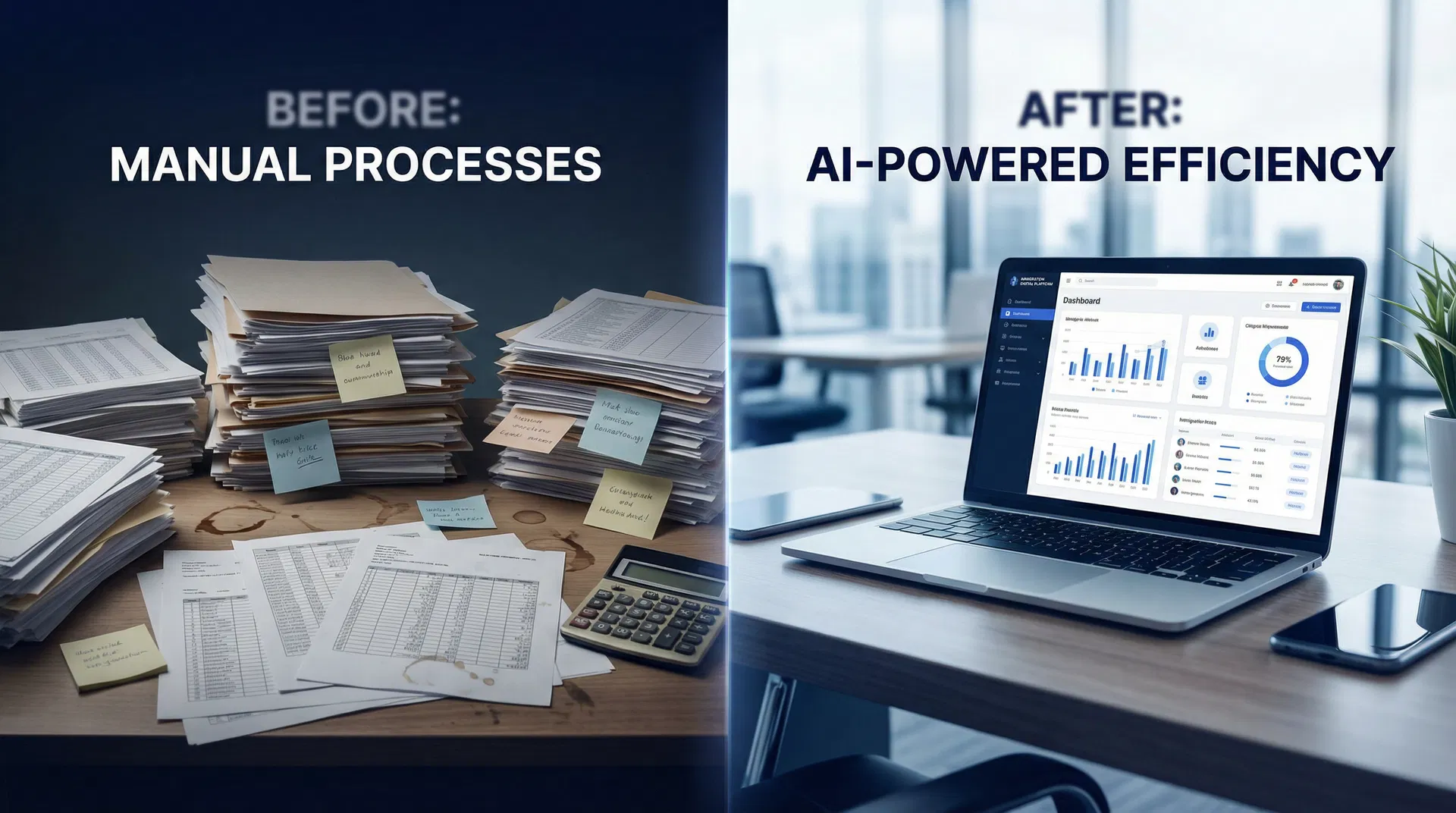
For decades, spreadsheets have been the unsung heroes of many law firms, providing a seemingly simple solution for tracking cases, managing client data, and organizing complex immigration processes. From visa application deadlines to client contact information, the humble spreadsheet offered a customizable, accessible tool. However, as the landscape of U.S. immigration law grows increasingly intricate and the volume of cases escalates, the limitations of these traditional tools are becoming glaringly apparent. Immigration law firms are now at a critical juncture, realizing that the path to true efficiency and accuracy lies beyond the rows and columns of Excel, ushering in a new era of **immigration law firm digital transformation** driven by AI platforms.
While spreadsheets offer initial ease of use, their long-term application in a demanding field like immigration law introduces significant challenges. The manual nature of data entry is inherently prone to human error, which can have severe consequences in legal contexts, from missed deadlines to incorrect filings. Version control becomes a nightmare, with multiple copies of a single document floating around, leading to confusion and wasted time as teams struggle to identify the most current information. Moreover, spreadsheets lack the robust security features necessary to protect sensitive client data, posing compliance risks.
Consider the sheer volume of data involved in immigration cases—client details, document checklists, filing dates, USCIS updates, and more. Managing this manually in spreadsheets is not only time-consuming but also a bottleneck for growth. As firms expand, the scalability of spreadsheet-based systems quickly diminishes, hindering their ability to take on more cases or streamline operations effectively. The effort required to maintain these systems often outweighs the benefits, prompting firms to actively seek ways to **replace spreadsheets** with more sophisticated solutions.
"The average legal professional spends nearly 20% of their workday on administrative tasks that could be automated, much of which involves manual data handling in outdated systems." – Legal Tech Report, 2024 (fictional)
The shift from spreadsheets to AI-powered platforms represents a fundamental change in how immigration law firms operate. This digital transformation isn't just about adopting new software; it's about embracing a paradigm where technology actively assists in managing, analyzing, and even predicting aspects of immigration cases. AI platforms offer a centralized, secure, and intelligent environment that addresses the core deficiencies of traditional methods.
These platforms bring unparalleled accuracy by automating data entry and validation, significantly reducing the risk of human error. They provide real-time visibility into case statuses, ensuring that all team members are working with the most up-to-date information. Furthermore, the advanced analytics capabilities of AI can identify patterns and offer insights that would be impossible to discern from raw spreadsheet data, empowering attorneys to make more informed decisions. This transition is not merely an upgrade; it's a strategic move that positions firms for greater efficiency, compliance, and client satisfaction.
Modern AI platforms are equipped with a suite of features designed to directly address the complexities of immigration law, making the decision to **replace spreadsheets** an obvious one for forward-thinking firms. Here are some of the most impactful capabilities:
Unlike disparate spreadsheets, AI platforms offer comprehensive case management systems. These systems provide structured matters with clear owners, customizable checklists, and automated deadline tracking. This ensures that every step of a case is meticulously documented and managed, eliminating the need for manual updates across multiple files and reducing the likelihood of critical tasks falling through the cracks. The ability to see the entire case lifecycle in one dashboard transforms operational oversight.
One of the most significant time-sinks with spreadsheets is the manual preparation of documents. AI platforms revolutionize this with robust document automation. They allow for the creation of reusable templates and the auto-filling of complex USCIS forms (such as N-400, I-129, I-485) directly from case data. This not only drastically cuts down on preparation time but also virtually eliminates typographical errors, ensuring consistency and accuracy across all client submissions.
Beyond individual tasks, AI platforms enable sophisticated workflow automation. Firms can design customizable templates for various case types, automatically assign tasks to team members, and set up multi-step sequences that trigger based on specific events or deadlines. This level of automation streamlines entire processes, from client intake to final filing, ensuring that cases move forward efficiently and predictably, freeing up legal professionals to focus on strategic legal work rather than administrative overhead.
The era of relying solely on spreadsheets for managing an immigration law practice is rapidly drawing to a close. The demands of modern legal work, coupled with the increasing complexity of immigration regulations, necessitate tools that are more robust, secure, and intelligent. AI platforms offer a compelling alternative, providing the infrastructure for true **immigration law firm digital transformation**.
By adopting these advanced solutions, firms can achieve unprecedented levels of efficiency, accuracy, and compliance, ultimately leading to better outcomes for their clients and a more sustainable practice for themselves. The move to **replace spreadsheets** is not just about technology; it's about future-proofing your firm and staying competitive in a rapidly evolving legal landscape. To explore how an AI-powered platform can transform your practice, visit legistai.com/features and discover the capabilities that are redefining immigration law.