
Back to all articles
Document Automation
5 Ways Document Automation Reduces Filing Errors for Immigration Attorneys
January 22, 20267 min readAI Immigration Tools
In the demanding field of U.S. immigration law, precision is paramount. Every form, every piece of evidence, and every submission must be meticulously prepared to avoid delays, rejections, or even adverse outcomes for clients. Yet, the sheer volume and complexity of USCIS forms, coupled with frequent updates and nuanced requirements, make USCIS filing errors a persistent challenge for even the most experienced immigration attorneys. These errors are not just minor inconveniences; they can lead to significant financial costs, wasted time, and profound stress for both law firms and their clients.
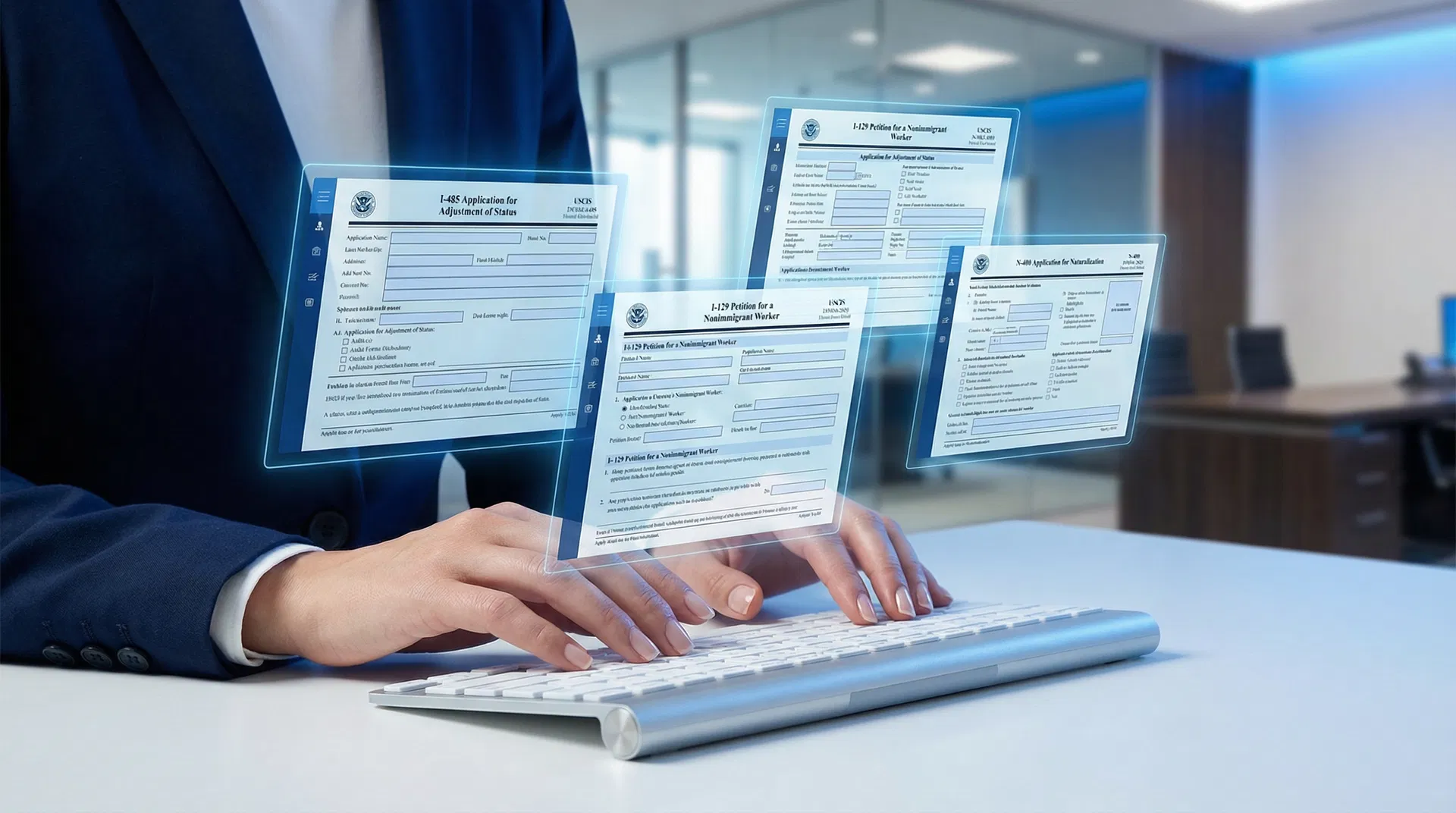
This article explores how document automation immigration solutions are transforming the way law firms operate, specifically by drastically reducing filing errors. By leveraging technology, immigration practices can enhance accuracy, streamline workflows, and ultimately deliver better results for their clients.
Filing errors with USCIS can manifest in various forms, from simple typos and missing signatures to incorrect form versions or insufficient supporting documentation. Regardless of their nature, the consequences are often severe:
- Delays and RFEs (Requests for Evidence): Errors almost invariably lead to RFEs, prolonging case processing times and requiring additional work from attorneys and paralagals. Each RFE adds weeks or months to a case, delaying critical outcomes for clients, such as employment authorization or family reunification.
- Case Denials: In more severe instances, errors can result in outright case denials, forcing clients to reapply, incur new fees, and endure further uncertainty. This not only damages client trust but also represents a significant loss of billable hours and resources for the firm.
- Reputational Damage: A pattern of filing errors can erode a firm's reputation, making it harder to attract new clients and retain existing ones. In a competitive legal landscape, a reputation for accuracy and efficiency is invaluable.
- Increased Operational Costs: The time spent correcting errors, responding to RFEs, and managing delayed cases translates directly into non-billable hours and increased administrative overhead. This impacts profitability and diverts resources from more productive tasks.
These costs underscore the urgent need for robust solutions that can mitigate the risk of errors at every stage of the filing process. Document automation emerges as a powerful answer. For more insights on preventing common pitfalls, read our article on how to reduce RFE rates through document validation.
Document automation platforms are specifically designed to address the pain points associated with manual document preparation. Here are five key ways they help immigration attorneys reduce filing errors:
1. Standardized Templates and Data Fields
One of the primary sources of errors in manual processes is inconsistency. Different paralegals or attorneys might use slightly different versions of forms or input data in varying formats. Document automation solves this by providing standardized, up-to-date templates for all common USCIS forms. These templates come with predefined data fields that ensure information is collected consistently and accurately. For example, a client's name will always be entered in the same format across all relevant documents, eliminating discrepancies that could trigger an RFE. For a detailed guide on automating form filling, check out our guide to auto-filling USCIS forms.
2. Automated Data Validation and Error Checking
Beyond standardization, document automation systems incorporate sophisticated data validation rules. As data is entered, the system can automatically check for common errors, such as:
- Missing Required Fields: Ensuring all mandatory fields are completed before a document can be generated.
- Incorrect Data Types: Verifying that numerical fields contain only numbers, dates are in the correct format, and text fields adhere to character limits.
- Logical Inconsistencies: Flagging potential conflicts, such as a birth date that precedes a parent's birth date, or an employment start date that comes after a termination date.
This real-time error checking acts as a proactive guardian, catching mistakes before they ever reach USCIS.
3. Dynamic USCIS Form Versioning
USCIS forms are notorious for their frequent updates. Using an outdated form version is a guaranteed path to an RFE or denial. Document automation platforms with dynamic USCIS form versioning automatically track and update to the latest forms. This means attorneys and paralegals always work with the most current versions, eliminating the risk of submitting obsolete paperwork. The system can also highlight changes between versions, ensuring that new requirements are not overlooked. Learn more about this crucial feature in our article on dynamic USCIS form versioning.
4. Centralized Data Management
Immigration cases involve a vast amount of client data, often spread across multiple documents, spreadsheets, and systems. This fragmentation increases the likelihood of data entry errors and inconsistencies. Document automation platforms often integrate with or include centralized data management systems. By entering client information once into a secure database, this data can then be automatically populated across all relevant forms and documents. This "enter once, use everywhere" approach dramatically reduces repetitive data entry and the associated error rate.
5. Streamlined Review and Approval Workflows
Even with automation, human review remains a critical step. However, document automation can make this process far more efficient and less prone to oversight. Platforms can implement customizable workflow templates that guide documents through a structured review and approval process. This ensures that every document is reviewed by the appropriate personnel, with clear checkpoints and digital sign-offs. Any identified issues can be quickly addressed within the system, creating an auditable trail of revisions and approvals.
The benefits of document automation extend far beyond simply reducing filing errors. By minimizing manual tasks and enhancing accuracy, immigration law firms can experience:
- Increased Efficiency: Attorneys and paralegals can dedicate more time to complex legal strategy and client interaction, rather than tedious data entry and error correction.
- Faster Case Processing: Reduced RFEs and denials mean cases move through the USCIS system more smoothly and quickly, leading to higher client satisfaction.
- Enhanced Compliance: Automated systems help ensure adherence to regulatory requirements and best practices, reducing the risk of compliance-related issues.
- Improved Client Experience: Clients benefit from quicker resolutions, fewer requests for additional information due to errors, and a more professional, organized legal process.
In an era where technology is reshaping every aspect of legal practice, embracing intelligent document automation is no longer a luxury but a necessity for immigration law firms aiming for peak efficiency and accuracy. By systematically addressing the root causes of USCIS filing errors, these solutions empower attorneys to focus on what they do best: providing expert legal counsel and achieving successful outcomes for their clients.
Ready to transform your immigration practice and virtually eliminate filing errors? Discover how LegistAI's advanced document automation features, including auto-filling of USCIS forms and dynamic USCIS form versioning, can streamline your operations and enhance client success. Visit legistai.com/features to learn more and schedule a demo today.
Topics:document automation immigrationUSCIS filing errors
Related Articles
Document Automation
Auto-Filling USCIS Forms: From N-400 to I-129, What You Need to Know
February 15, 2026Read