Document Automation
5 Ways Document Automation Reduces Filing Errors for Immigration Attorneys
January 22, 2026Read

For U.S. immigration law firms, managing H-1B, TN, and L-1 visa petitions is a cornerstone of their practice. These non-immigrant work visas are critical for businesses seeking to employ foreign talent and for individuals pursuing professional opportunities in the United States. However, the inherent complexities—from stringent regulatory requirements and extensive documentation to tight deadlines and evolving policies—can overwhelm even the most experienced legal teams. Traditional, manual processes often lead to inefficiencies, increased risk of errors, and significant administrative burdens, diverting valuable time and resources from strategic legal work.
In today's fast-paced legal landscape, relying on outdated methods is no longer sustainable. The sheer volume of applications, coupled with the need for meticulous accuracy, demands a more sophisticated approach. This article explores how modern technology can revolutionize H-1B, TN, and L-1 processing, offering immigration law firms powerful tools to streamline operations, enhance compliance, and ultimately deliver superior client service.
Before delving into technological solutions, it's crucial to understand the common pain points associated with conventional work visa processing:
One of the most time-consuming aspects is the repetitive entry of client and beneficiary data across multiple forms and internal systems. This not only consumes countless hours but also significantly increases the likelihood of transcription errors, which can lead to Requests for Evidence (RFEs) or even denials.
Without a centralized system, case progress often relies on a patchwork of emails, spreadsheets, and physical files. This fragmented approach makes it difficult to track case status, assign tasks, and ensure seamless collaboration among team members. Critical deadlines can be missed, and communication with clients may become inconsistent, leading to frustration.
H-1B, TN, and L-1 petitions require an extensive array of supporting documents, from educational transcripts and employment letters to corporate financial statements. Organizing, versioning, and securely sharing these documents can be a logistical nightmare, especially when dealing with multiple clients and cases simultaneously. The risk of using outdated forms or misplacing vital evidence is ever-present.
"Studies show that law firms spend up to 30% of their time on administrative tasks that could be automated, highlighting a significant opportunity for efficiency gains through technology." - Legal Tech Report, 2024
Immigration law is constantly evolving. Keeping abreast of the latest USCIS regulations, policy memos, and form updates is a continuous challenge. Manual monitoring of these changes is prone to oversight, potentially jeopardizing case outcomes and firm reputation.
Modern immigration technology offers comprehensive solutions to address these challenges, transforming how law firms manage work visa cases. By integrating specialized software, firms can achieve unprecedented levels of efficiency, accuracy, and client satisfaction.
At the core of effective work visa processing is robust case management software. These platforms provide a centralized hub for all case-related information, allowing firms to:
This structured approach ensures that every H-1B, TN, and L-1 petition follows a consistent, compliant process, minimizing the risk of errors and delays.
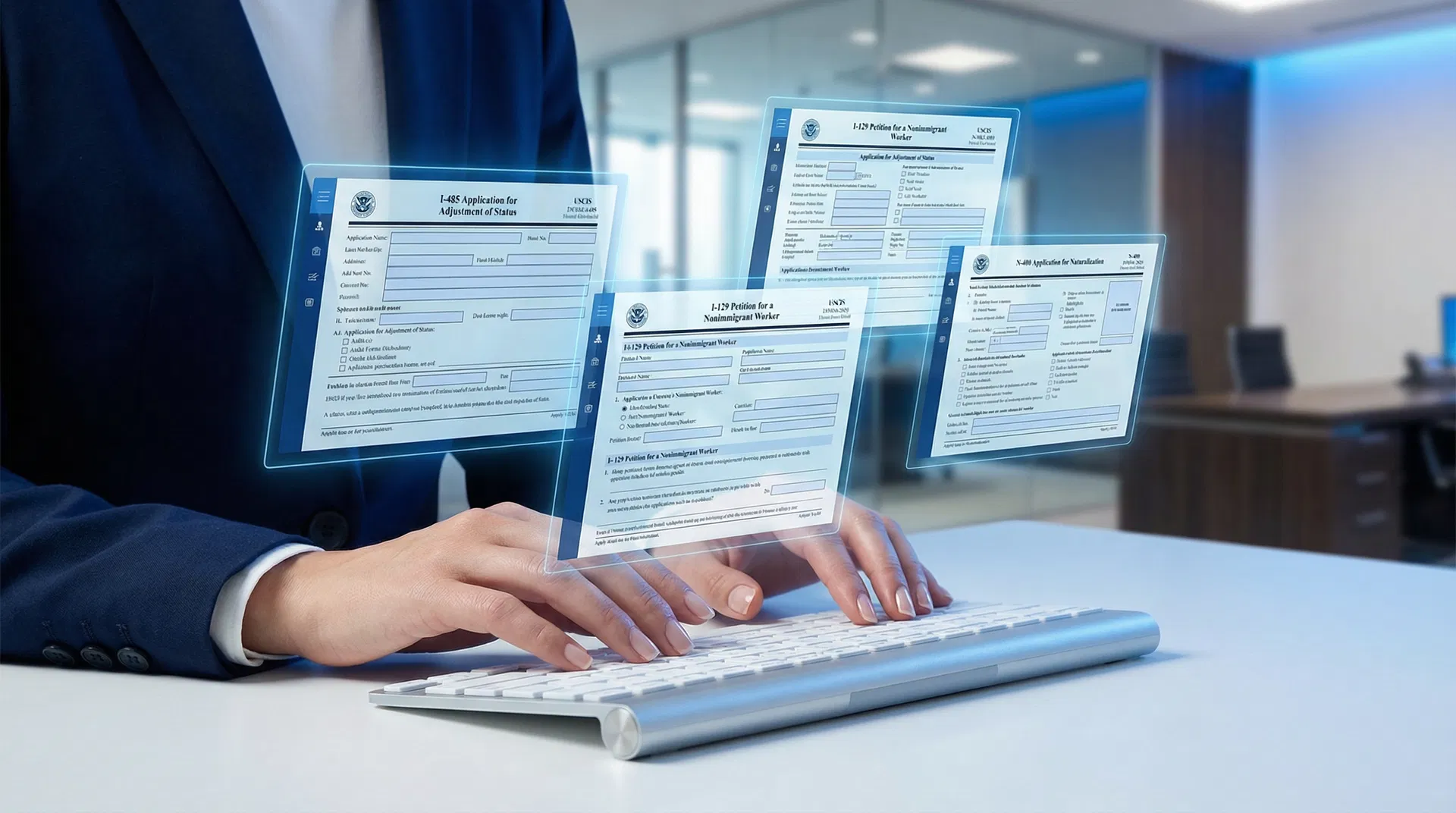
Document preparation is arguably the most labor-intensive part of work visa applications. Technology, particularly document automation tools, dramatically simplifies this process:
By automating document generation, firms can significantly cut down preparation time, allowing legal professionals to focus on substantive legal analysis rather than clerical tasks.
Beyond individual tasks, technology can orchestrate entire work visa processes through workflow automation. This involves designing customizable templates for different case types (H-1B, TN, L-1) that automatically trigger actions, assign tasks, and move cases through predefined stages. For example, once an H-1B petition is filed, the system can automatically initiate the next steps, such as preparing for RFE responses or H-1B cap registration.
A secure client portal integrated with the case management system can transform client interactions. Clients can securely upload documents, track their case status in real-time, and communicate with their legal team, reducing the need for constant phone calls and emails. This transparency builds trust and improves the overall client experience.
The landscape of U.S. immigration law is complex and ever-changing, but the tools available to navigate it are more sophisticated than ever. By embracing technology, immigration law firms can move beyond reactive, manual processes to proactive, streamlined operations. This not only improves efficiency and reduces the risk of errors in H-1B, TN, and L-1 processing but also frees up legal professionals to provide higher-value strategic advice to their clients.
For firms looking to optimize their work visa case management, platforms like LegistAI offer comprehensive solutions. With features such as structured case management, intelligent document automation, and customizable workflow automation, LegistAI empowers immigration attorneys to handle complex H-1B, TN, and L-1 petitions with greater precision and speed. Discover how LegistAI can transform your practice by visiting legistai.com/features.